Showing posts with label Book review. Show all posts

Sunday, September 21, 2014

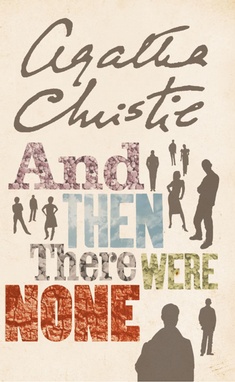
And Then There Were None: A Philosophical Quandry

There is a satisfaction with a murder mystery.  It is a simple world, really.  We have bad guys who murder people and we have victims and we have good guys who figure out the mystery.  It is also pretty straightforward about discovering truth.  Really, the basic murder mystery belongs to an enlightenment philosophy-- reason and deduction can discover the most important truths of the world, if only you have someone clear-headed enough to not be distracted by red herrings.  In a typical murder mystery, we pit our deduction skills against the protagonist to see if we can discover the truth before she or he does. Of course, we might have a hand up if we've read a number of mysteries ourselves because there are rules and hints just in the writing of the novel.  This is what makes a writer like Scott Turow so fantastic because he uses the context of a mystery against us, causing us to make false assumptions right from the start.

But And Then There Were None although a traditional mystery, goes a couple steps beyond more mysteries.  One the surface, we have a number of the same limitations: an isolated island, ten people, one of whom is a murderer, and the number grows less as the book progresses.  We collect more information about each character as we go on, informing us as to the likely candidates... we make our guesses and then we re-guess after our first guesses are done away with.

As I was reading the book, these were the guesses I made, and the reasons (all of this is revealed in the first half of the novel):

-Anthony James Martin has the moral cause to kill-- human life doesn't mean much to him, so if he had enough cause (even possibly for his own entertainment) he might kill folks.  Also, he is the first killed, by his own hand, which still makes him a suspect (although a doctor declaring him dead is a strong case against him as a suspect)

-Dr. Armstrong has the means to kill.  He had the poisons and the intelligence to arrange the rest of the murders.  Although there is no real motive, ease of opportunity is a significant factor.

-Judge Wargrave might very well agree with the motive given by the mysterious voice.  He is a judge and so concerned with justice, and the motive was to sentence those who were declared (by the voice) guilty of murder.  He is the one who might be most concerned to see the sentence carried out.

-William Blore was a police inspector and so would have experience with how to hide the murders, as well as seeing different crimes himself.  He has the kind of intelligence needed to carry out these murders and to make sure that they remain hidden from the police.

Of course, Lombard had a gun (in turn of the century Britain), which makes him suspect.  Thomas Rogers might have greater access to the rest of the house and had more time to investigate the island to set the murders up, and he has access to the food and drink.  Emily Brent seems judgmental enough to condemn the others and is crazy in the head.

We have plenty of information about each character to make a decision... but this is where the ideals of the "age of reason" fall short.  We both have too much and too little information.  Every person on the island is already a murderer, so they are all capable of it.  We don't know the secret motives of whoever the murderer is.  Even in a limited scope-- ten people on an isolated island-- there are too many details for us to discover truth.

Doesn't that teach us something about truth in general?  If we are counting on truth being obvious if only we have accumulated enough facts, we can see that even in an extremely limited universe, which is explained to us the simplest, straightforward language, there is still too much for us to discover the important truth of who is taking life.  None of the ten can save their lives from the judgment, because no matter how clear headed they are, they cannot distinguish the significant facts from the insignificant.  And, of course, because they are in the midst of a life and death situation, they are not as clear-headed as necessary to make clear decisions and analyze correctly.

In a sense, this island is exactly the same circumstance we all find ourselves in.  We are all seeking the most significant truth for the sake of our lives, but reality is too complex, and it is too easy to focus on the red herrings, and the very things we think that might saves us, the very deductions we depend on, might end up killing us.

Spoiler ahead: This is the most cynical of novels, where we find out the murderer only when it is too late.  No one can be saved.  No one can even be brought to justice.  The murderer wins, and we only discover the truth because he determines to let us know.  Reason, deduction, the entire age of enlightenment is suspect because the truth that was most significant could not be discovered, even in the pages of a simple murder mystery. 
Spoiler over

 Truth is forever hidden from us.  Meaning and life must be determined outside of reason or the search for truth.

Wednesday, April 04, 2012

The Red Tent: A Review

You might think it strange for me to say, but I love the Bible.  I know, I'm a pastor, so I'm supposed to love the Bible, but I am surprised at how few pastors really appreciate the Bible.  Most Christian teachers scour the Bible for their own points of view, or review it quickly for their sermons, or for proof texts.  But I think the Bible is full of not only ancient wisdom, but of some of the best stories ever.  That's one of the main reasons the Bible survived at all, you know, because so many of the stories are unforgettable.  Not only are they memorable, along the lines of Grimm or Hans Christian Anderson, they are short and easy to repeat.  You can just read them aloud in a completely different language and you can get a sense of their impact.


But there are some issues that are problematic with the Bible.  Not only those who claim more for the texts than the texts themselves allow, but also a matter of perspective.  There are only three stories that are told from a woman's point of view-- a spare book named Ruth, the story of Samuel's birth and a thinly told story of Jesus' resurrection.  All the rest of the Bible is told from a male point of view.  Yes, at times women are included, but more often than not, women are treated as possessions of men, with not even their names passed on.  There are certain heroes who are women: Sarah, Esther, Deborah, Abigail, Mary Magdalene, Mary the mother of Jesus, Tabitha.  But these stories are told from the wrong side of the ancient sexual veil, and their hearts aren't revealed, only actions.


Anita Diamant has written a book which breaks down that veil.  One of the most ugly, deeply disturbing stories of the Bible is found in Genesis, about Dinah, the daughter of Jacob, taken by a local prince who was taken vengeance upon by her brothers Levi and Simeon.  But what was her perspective?  And what about the four wives of Jacob, how do they see their co-marriage, their children, their husband's sometimes strange actions?  Daimant does a marvelous job of taking the Bible text and reading between the lines to understand the woman's perspective.  She not only understands the ancient women, but also their pagan perspective, so their stories are not given through the Yahwist's perspective.  The novel is raw, emotional and strangely joyful for all the ugliness of the original stories.  


Even if you aren't a fan of the Bible, if you like historical fiction in any form, this is a keeper.  It is powerful and dramatic.  In a sense, it might be better without knowledge of the stories of Genesis, because they can impact you better.  5/5